In line with its vision to prepare a generation of economic analysts capable of dealing with digital transformations, the College of Administration and Economics at the University of Karbala organized a specialized training course titled:
“Economic Data and How to Analyze It Using Statistical Software”
The course was held from Sunday, March 1, 2026, to Tuesday, March 3, 2026, and directly targeted undergraduate students, aiming to equip them with the technical skills needed to transform raw data into valuable economic insights with advisory and predictive value.
The training sessions were led by a specialized academic team from the Department of Economics, including:
- Assist. Prof. Dr. Namarq Qasim
- Assist. Prof. Dr. Zainab Hadi Neama
- Asst. Lect. Basheer Dohan
During the course, the lecturers emphasized that advancements in economic sciences now heavily depend on the accuracy of statistical analysis, and that mastering specialized software has become essential for success in the labor market and for producing high-quality graduation research.
The training program included both theoretical and intensive practical components, covering:
- Sources of Economic Data: How to obtain data from official websites and central banks while ensuring reliability.
- Working with Statistical Software: Introductory training on data entry and coding using programs such as SPSS and EViews.
- Statistical Tests: Explanation of descriptive and inferential tests, regression analysis, and understanding relationships between macroeconomic and microeconomic variables.
- Interpreting Outputs: Developing the ability to read statistical tables and convert numerical results into logical economic conclusions that support decision-making.
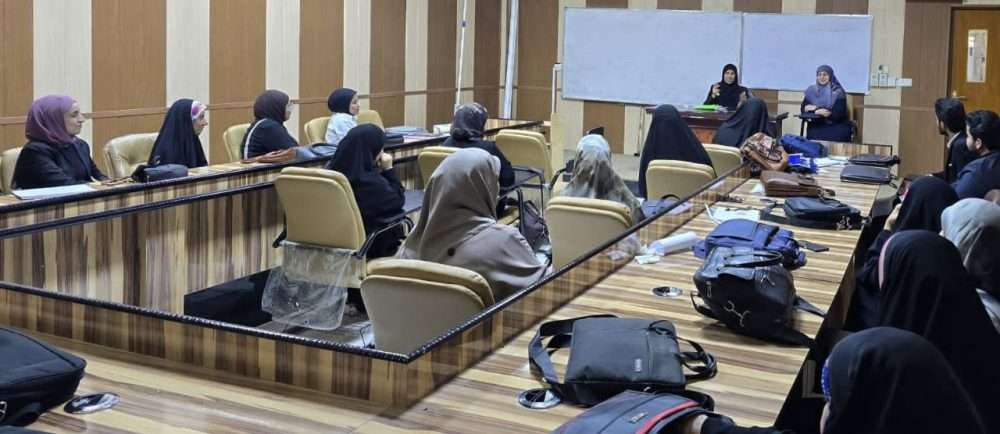
The course aimed to eliminate students’ apprehension toward mathematical modeling and complex software, while linking theoretical knowledge with practical application. The sessions witnessed strong engagement from students, who conducted hands-on applications using real data models under the supervision of the training team, enhancing their analytical and research capabilities.
This initiative comes as part of a series of training activities organized by the college administration to improve students’ competencies and prepare them to keep pace with global scientific developments, emphasizing the importance of technical skills in supporting both educational and research processes.