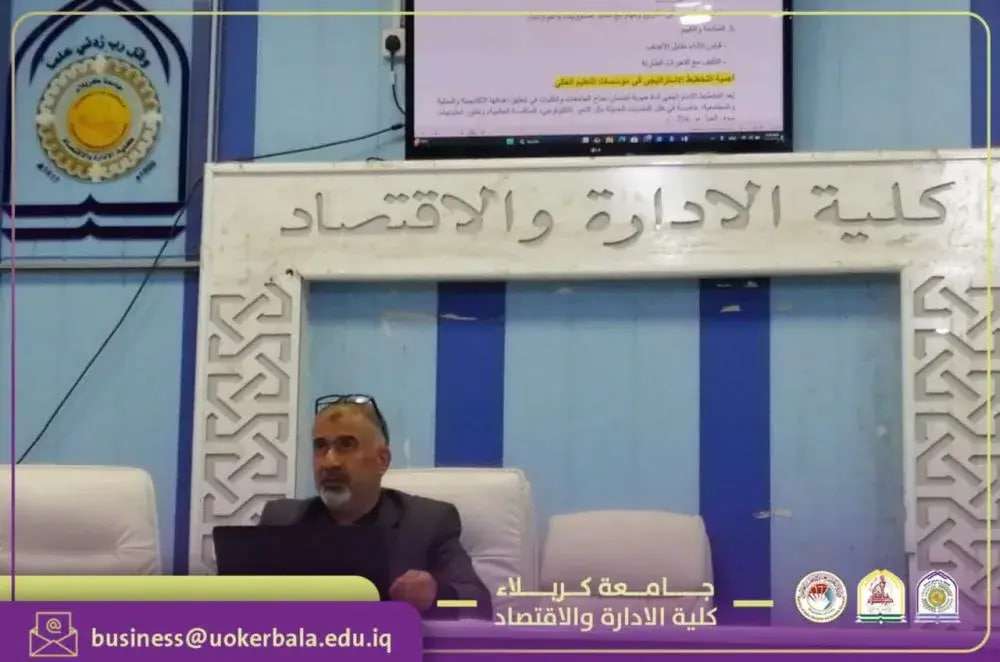
The College of Administration and Economics at the University of Karbala organized a training course titled “Fostering a Culture of Strategic Thinking and Planning in Higher Education Institutions,” as part of its ongoing efforts to enhance strategic planning and thinking skills among academic and administrative staff in institutions affiliated with the Ministry of Higher Education.
The course covered several key topics, including:
- The Concept of Strategic Planning: Introducing the importance of strategic planning in achieving institutional goals and ensuring sustainability.
- Strategic Thinking Skills: Developing the ability to analyze internal and external environments and anticipate future challenges.
- Developing Strategic Plans: How to formulate future visions, set strategic goals, and determine appropriate mechanisms for implementation.
- Evaluation and Follow-Up: Methods for measuring performance and assessing strategic plans to ensure goal achievement.
The course was delivered by Assistant Lecturer Ihab Ziyad Mohammed, who provided an in-depth explanation of strategic thinking mechanisms, with a focus on their practical applications in institutions of the Ministry of Higher Education. He also presented real-world case studies that demonstrated the vital role of well-designed planning in achieving institutional success.
The course witnessed strong attendance from both faculty and administrative staff at the university, as well as interested participants from other institutions. Sessions were marked by active engagement, with lively discussions and questions reflecting a high level of awareness regarding the importance of strategic planning in educational institutions.
Course Objectives:
- Promote a culture of strategic planning within higher education institutions.
- Develop systematic thinking skills among educational personnel.
- Improve evaluation and follow-up capabilities for effective implementation of plans.
At the conclusion of the course, participation certificates were distributed to attendees, along with an emphasis on the importance of applying the acquired skills and knowledge in the workplace to achieve sustainable development and institutional success.
4o