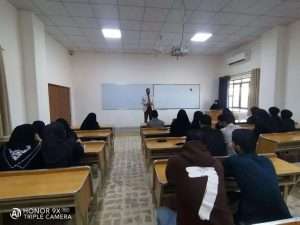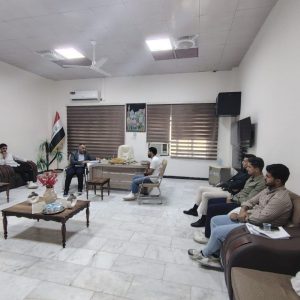
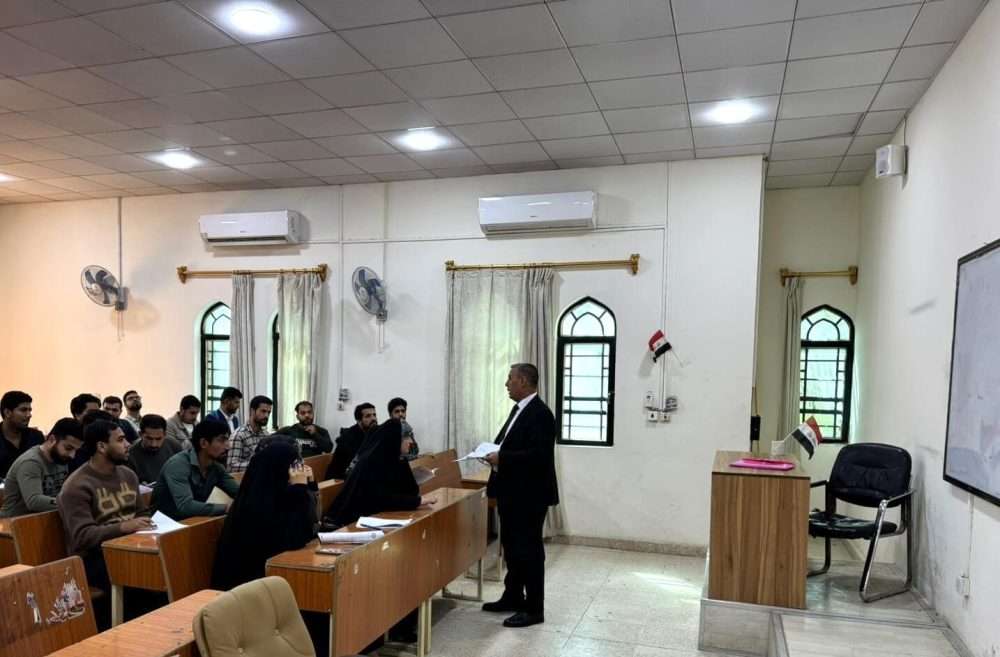
In line with the rapid developments in digital transformation and artificial intelligence, the Department of Business Administration at the College of Administration and Economics, University of Karbala, organized a pioneering scientific and awareness course titled “Algorithmic Fairness: How Do We Design Administrative Systems that Overcome Human Bias?”, held from March 1 to March 3, 2026.
The course targeted undergraduate students, aiming to build their critical and technological awareness of how algorithms can be used in administrative decision-making بعيداً عن التحيزات التقليدية.
The lectures were delivered by:
- Prof. Dr. Mahmoud Fahad Abdulali
- Lecturer Dr. Yasser Mahmoud Fahad
The course covered several advanced research and technical topics, including:
Concept of Algorithmic Fairness:
Explaining how to design administrative software that ensures integrity and transparency in decision-making (such as recruitment, promotion, and performance evaluation).
Addressing Human Bias:
Highlighting how personal or societal biases can be embedded in data, and how properly designed intelligent systems can mitigate these gaps to achieve fairness and equality.
Data Ethics:
Focusing on the ethical responsibility of academic and professional managers in the era of big data, ensuring that technology does not become a tool for discrimination.
Modern Administrative Applications:
Reviewing global models of administrative systems that have successfully reduced human error and improved institutional efficiency through fair algorithms.
The lecturers emphasized that the future of management is moving toward “data-driven management,” which requires a new generation of graduates capable of dealing with these technologies through a human-centered and ethical perspective that ensures fairness for all.
The course sparked extensive discussions between students and lecturers about the future of administrative jobs in the age of artificial intelligence, as well as the legal and technical safeguards required to achieve digital fairness.