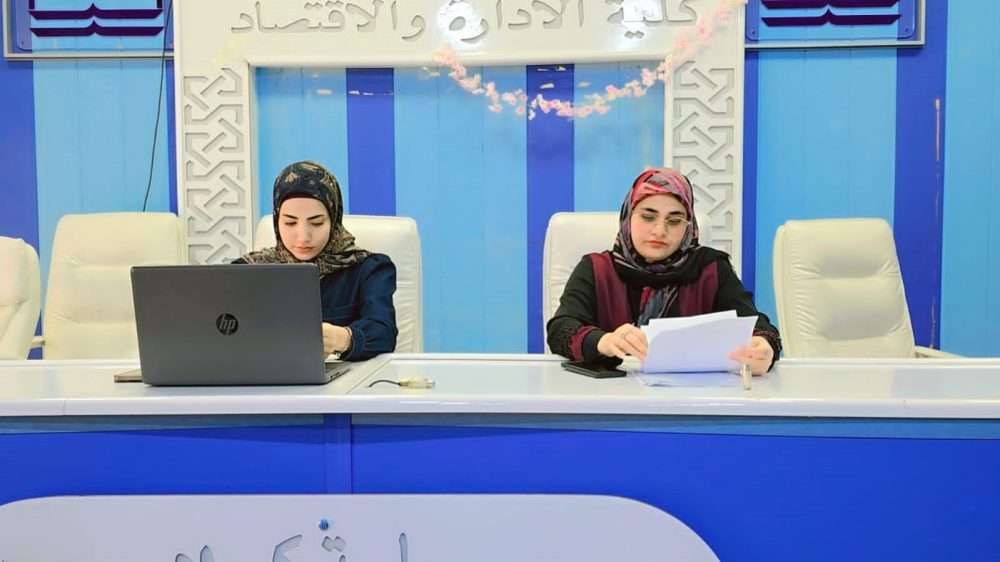
As part of its training program aimed at developing the capabilities of its human resources and enhancing administrative performance efficiency, the College of Administration and Economics at the University of Karbala organized a specialized training course entitled “Organizational Change and Leadership in Times of Crisis.” The course was held at Al-Rafidain Hall from March 15 to March 17, 2026.
The course targeted the college’s staff and faculty members, with the objective of highlighting modern mechanisms for managing academic institutions during sudden changes, and how to transform challenges into opportunities for development and advancement.
The course was delivered by:
- Assistant Lecturer Marwa Ali Nima
- Assistant Lecturer Zahraa Fadhil Atiyah
- Assistant Lecturer Noof Ali Awad
The course covered several key strategic themes, most notably:
1. Organizational Change Concept:
An explanation of the necessity of change within institutions to keep pace with global developments, along with strategies for managing “resistance to change” among staff and transforming it into a productive and positive force.
2. Strategic Leadership in Crises:
A review of the leadership skills required to make quick and accurate decisions under pressure, as well as the characteristics of successful leaders in managing crises and minimizing their negative impacts.
3. Institutional Flexibility:
Training on building cohesive teams capable of adapting to emergency conditions, while ensuring the continuity of academic and administrative work at the highest possible quality.
4. Effective Communication:
Emphasizing the importance of clear communication channels between management and staff during periods of transition to ensure transparency and unify efforts toward achieving the college’s goals.
Throughout its three days, the course witnessed strong engagement from faculty members and staff, who participated in discussions of real-life scenarios and explored the best ways to apply modern leadership concepts within the university work environment, contributing to strengthening the college’s position and improving the quality of its outcomes.