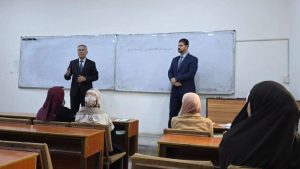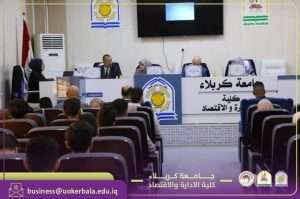
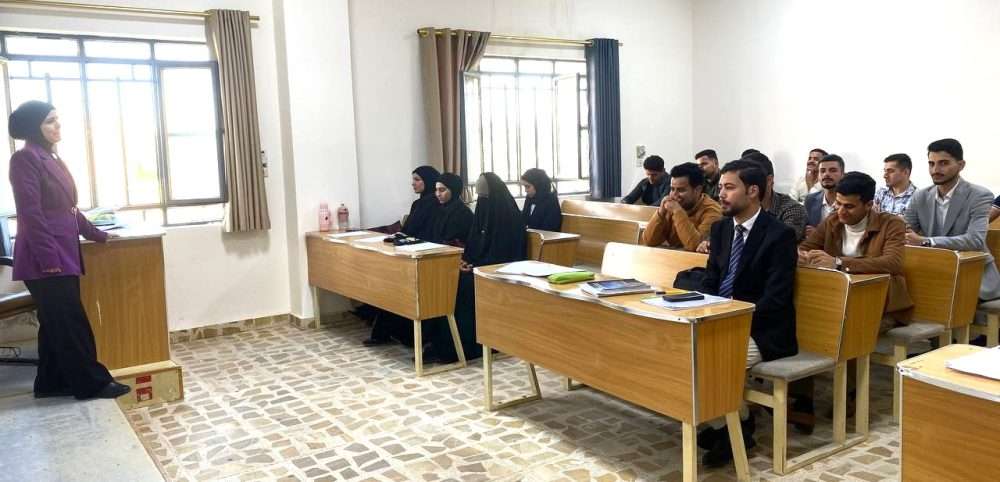
As part of its ongoing efforts to keep pace with global developments in managerial accounting systems and modern manufacturing cost techniques, the Department of Accounting at the College of Administration and Economics, University of Karbala, organized a specialized training course entitled “Target Costing and Value Engineering in Accounting,” held from March 24 to March 26, 2026.
The course targeted undergraduate students, aiming to equip them with contemporary knowledge and techniques that contribute to cost reduction and product quality improvement, thereby enhancing the competitive advantage of economic institutions.
The course was delivered by:
- Assistant Lecturer Sara Mousa Matjar
- Assistant Lecturer Zainab Salem Abdulzaid
The course program included focused theoretical and practical topics, أبرزها (replace Arabic):
→ must fix: “including the following key areas:”
1. Target Costing Concept:
An explanation of how to determine the allowable cost of a product based on the target market price and desired profit, and how to reverse the traditional cost equation to suit highly competitive environments.
2. Value Engineering:
Highlighting this tool as a systematic approach to analyzing product functions and improving value by identifying alternatives that reduce costs without compromising quality or performance.
3. Integration Between Target Costing and Value Engineering:
Clarifying the interrelationship between the two tools during product design and development stages to ensure meeting customer needs at the lowest possible cost.
4. Practical Accounting Applications:
Presenting examples and case studies of organizations that successfully implemented these techniques, and how this has positively impacted financial performance efficiency and profitability.
During the sessions, the lecturers emphasized that cost management skills are no longer limited to recording data, but have become a strategic partner in product design and managerial decision-making within modern organizations.
The course witnessed active engagement from students, who participated in discussions about the importance of these techniques in the Iraqi business environment and how they can apply them in their future careers.