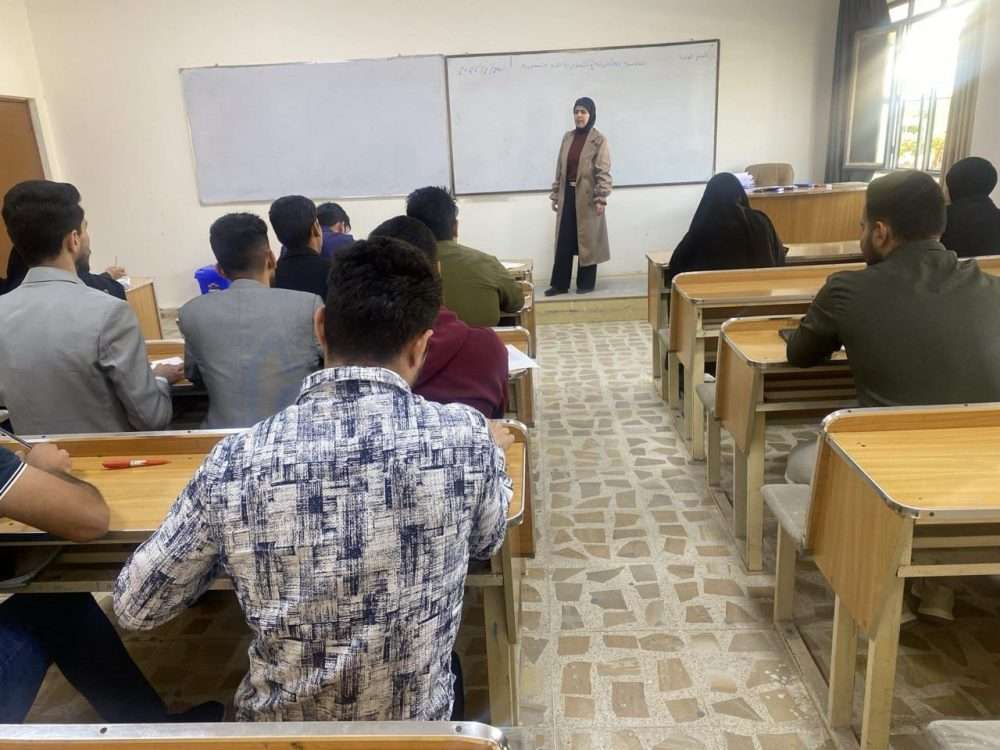
As part of its continuous efforts to update the technical skills of its students in line with the requirements of the digital job market, the College of Administration and Economics at the University of Karbala organized a specialized training course entitled:
“Electronic Accounting and the Use of Cloud Systems.”
The course was held from Sunday, February 22, 2026, to Tuesday, February 24, 2026, and was primarily aimed at undergraduate students, introducing them to the latest technologies used in managing financial and accounting data through digital platforms.
The course was delivered by a group of specialized academic staff members:
- Asst. Lecturer Sara Musa Matjar
- Asst. Lecturer Zainab Salem Abdzaid
During the sessions, the lecturers emphasized that traditional accounting has become closely linked with cloud technologies (Cloud Accounting), stressing the importance for modern accountants to possess skills in using software that allows secure and real-time access to financial data from anywhere in the world.
The course included both theoretical and practical training covering several key topics:
- Concept of Cloud Accounting: Explaining the differences between traditional accounting software and cloud systems in terms of cost, security, and efficiency.
- Electronic Accounting Tools: An overview of major international and local platforms that enable electronic management of accounts, inventory, and payroll.
- Data Security and Privacy: Methods of protecting financial records on the cloud, including backup management and encryption.
- Practical Applications: Training students on how to enter accounting entries and automatically generate financial reports using simplified cloud-based models.
The course aimed to reduce the gap between academic curricula and the practical reality of the private sector and investment companies, which now rely heavily on electronic systems. The program witnessed notable interaction from students, who showed strong interest in learning how technology can be used to simplify complex accounting processes and reduce human errors.
This initiative comes as part of the college’s strategic plan to enhance educational outcomes and ensure the graduation of accounting professionals who possess both strong academic knowledge and advanced technical skills, thereby increasing their chances of obtaining distinguished job opportunities in the modern business environment.