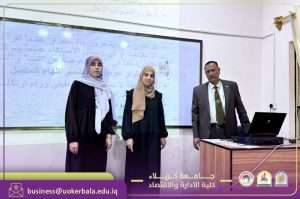
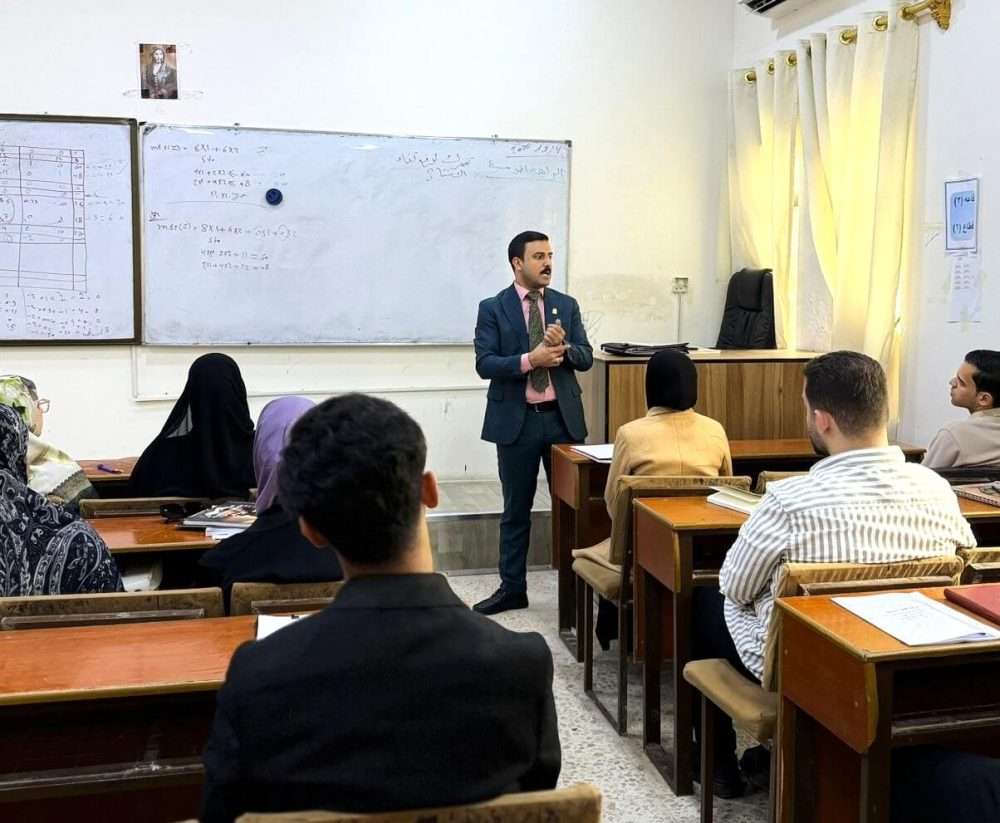
Based on the principle that academic rigor begins with ethical and professional integrity, the College of Administration and Economics at the University of Karbala organized a training and awareness course titled “Institutional Integrity as a Driver for Enhancing Scientific and Service Productivity in the University,” held from March 4 to March 8, 2026.
The course targeted undergraduate students, aiming to instill values of academic honesty and administrative responsibility, and to prepare them as future leaders who believe that integrity is the true key to achieving development and high productivity.
The course sessions were delivered by:
- Professor Dr. Mahmoud Fahd Abdulali
- Lecturer Dr. Yasser Mahmoud Fahd
The course addressed several key strategic themes linking ethics with tangible outcomes, including:
Integrity and Scientific Research: Highlighting the importance of academic honesty in conducting research, avoiding plagiarism, and how research integrity contributes to improving the university’s global ranking.
Integrity in Service Aspects: Explaining how transparency and clarity in administrative dealings within the university help improve the quality of services provided to students and society, while reducing time and effort waste.
Building a Fair Institutional Environment: Demonstrating the role of integrity in fostering trust between students and the educational institution, thereby creating a stimulating environment for creativity and innovation.
Combating Administrative and Financial Corruption: Raising students’ awareness of the risks of corruption and its negative impact on institutional efficiency, as well as methods of prevention through adherence to rules and regulations.
During the sessions, the lecturers emphasized that “integrity” is not merely a شعار (slogan), but a daily practice and a working approach that inevitably leads to improved performance and higher-quality educational and service outcomes, making the university a beacon of both knowledge and values.
The course received significant engagement from students, who actively participated through questions and discussions on ways to strengthen integrity in their academic and professional lives, affirming the importance of such programs in shaping their academic and professional personalities.