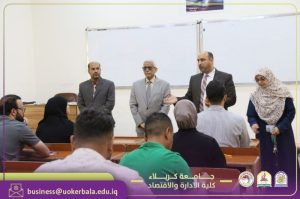
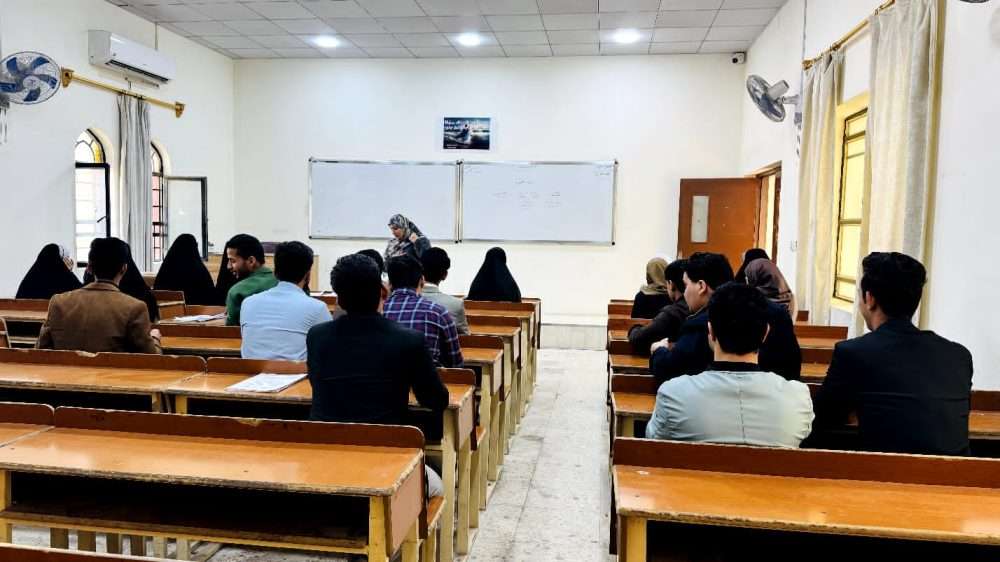
In response to the rapid technological transformations taking place in the academic environment, the College of Administration and Economics at the University of Karbala organized a training and awareness course entitled “The Pros and Cons of Using Artificial Intelligence in Education” from March 12 to March 15, 2026.
The course targeted undergraduate students, aiming to equip them with the necessary knowledge to use artificial intelligence tools responsibly and effectively in their academic journey, while protecting them from falling into uncritical or excessive reliance on these technologies.
The course sessions were delivered by a distinguished academic team, including:
- Professor Dr. Munadel Al-Jawari
- Assistant Lecturer Noof Ali
- Assistant Lecturer Zahraa Fadhil Atiyah
- Assistant Lecturer Fatima Turki Nima
The course topics were distributed over four days and included:
1. Opportunities and Advantages محور الإيجابيات والفرص:
This section highlighted how artificial intelligence can serve as a “personal assistant” for students by summarizing large volumes of information, assisting in language learning, and providing personalized learning environments tailored to each student’s pace of understanding.
2. Drawbacks and Challenges محور السلبيات والتحديات:
This section warned against the risks of excessive dependence on AI, which may lead to a decline in critical thinking and creativity skills. It also addressed the issue of “AI hallucination,” where systems may produce incorrect information in a convincing manner.
3. Academic Integrity and Ethics محور الأمانة العلمية والأخلاقيات:
This part clarified the boundaries between using AI as a supportive tool for development and committing academic plagiarism, emphasizing adherence to ethical standards when preparing research and reports.
4. Practical Applications التطبيقات العملية:
Students were trained on how to formulate effective prompts to obtain accurate and useful results, along with methods for manually verifying the correctness of AI-generated outputs.
At the conclusion of the course, the lecturers emphasized that artificial intelligence is “a tool to empower the mind, not a substitute for it,” stressing the importance of keeping pace with these technologies while preserving students’ academic identity and personal effort.
The course witnessed strong participation from students, who engaged in interactive discussions about the future of education and how to adapt to artificial intelligence, particularly in the fields of administration and economics.