As part of its scientific program aimed at developing the research and analytical skills of graduate students, the College of Administration and Economics at the University of Karbala organized a specialized training course titled:
“Statistical Tests in Scientific Research.”
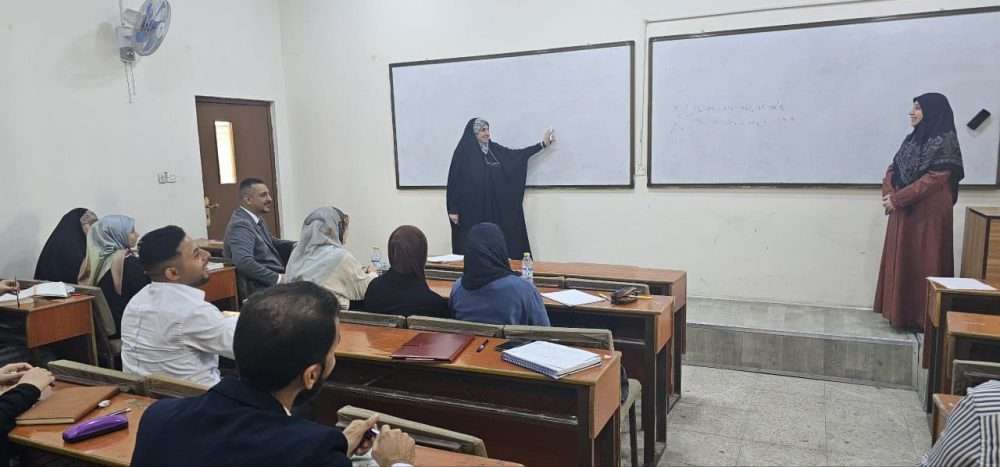
The course was held from Monday, February 16, 2026, to Wednesday, February 18, 2026, and directly targeted graduate students (Higher Diploma, Master’s, and PhD) from various academic departments within the college. The aim was to enable them to select appropriate statistical tools for the hypotheses of their research and academic theses.
The course was delivered by a group of professors specialized in statistics and quantitative analysis, including:
- Prof. Dr. Shorouq Abdul Ridha
- Dr. Enas Abdul Hafez
- Dr. Sada Fayez
The course included intensive training sessions covering the following topics:
Principles of Test Selection:
Understanding the difference between parametric and non-parametric tests, and when each type should be used.
Statistical Hypothesis Testing:
A detailed explanation of T-tests, Analysis of Variance (ANOVA), as well as correlation and regression coefficients.
Interpreting Statistical Outputs:
How to read results generated by statistical software such as SPSS and AMOS, and translate them into solid economic and administrative conclusions.
Common Research Errors:
Highlighting mistakes researchers often make when selecting statistical methods and how to avoid them to ensure acceptance of research in international journals.
The course aimed to overcome the practical difficulties faced by graduate students in their theses and dissertations, and to enhance the quality of statistical analysis, ensuring the academic rigor of the theses and research produced by the college.
The sessions witnessed high-level scientific discussions, during which students presented samples of their research data, and the most appropriate statistical tests for analyzing them were discussed.
This course is part of a series of workshops organized by the college administration to create an integrated research environment that contributes to improving the quality of the university’s scientific publications and meets the requirements of development based on accurate statistical foundations